Why Early Morning Kickoffs Are Hurting the Growth of the FUFA Women Super League

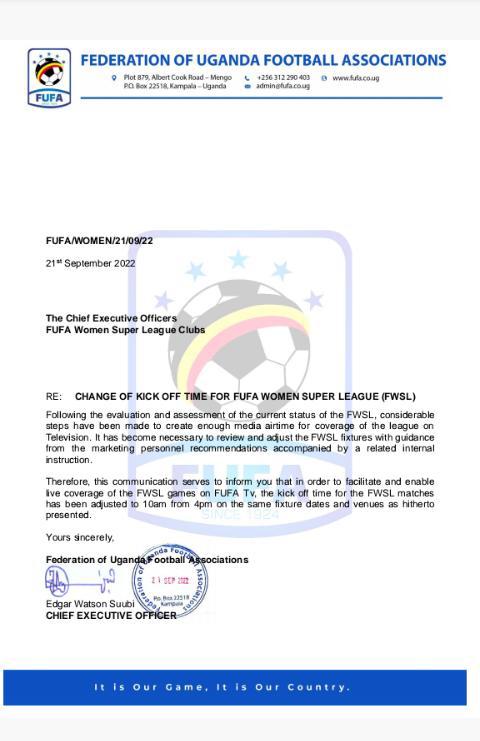
For the past four seasons, the FUFA Women Super League has operated under an early morning kickoff schedule, with most matches starting at 10am.
When the changes were introduced, FUFA explained that the arrangement would make it easier for broadcasters to televise women’s football matches. On paper, it appeared to be a progressive step for the league. In reality, however, many people within the game now believe the system has done more harm than good.
The biggest concern is that the promised television coverage has never fully materialised. Only a handful of matches are broadcast live each season, while the majority of clubs continue to play without cameras, exposure, or meaningful media attention.
Even worse, the limited broadcasts appear heavily concentrated around a few teams, particularly Kampala Queens FC, who have consistently enjoyed the largest share of televised matches over the years.
That imbalance has left many players and clubs feeling overlooked despite producing outstanding performances. A clear example is last season’s top scorer, Resty Kobusobozi of Lady Doves FC.
Throughout the 2024/25 campaign, Kobusobozi scored goals consistently and emerged as one of the league’s standout performers. Surprisingly, however, very few of her goals were captured on camera because Lady Doves matches were rarely selected for live broadcast.
For a player who dominated the season, the lack of visibility was a major setback, not only for her personal brand but also for the growth of both the club and the league.
Women’s football in Uganda already struggles for attention, sponsorship, and media coverage. When some of the league’s best moments are never seen by fans, it becomes difficult to market players or create stars that supporters can identify with and follow.
The timing of matches has also negatively affected attendance and promotion. Sunday mornings are traditionally reserved for church and family activities for many Ugandans.
On Saturdays, many people are either working, travelling, or recovering after long nights out. Asking supporters to wake up early and attend matches at 10am has, in many cases, proven unrealistic.
As a result, stadiums often appear empty even when the football on display is entertaining. Clubs struggle to effectively promote fixtures because there is little excitement surrounding morning kickoffs.
The atmosphere suffers, players miss the motivation that comes with large crowds, and the league loses valuable opportunities to build a stronger fan culture.
There is also the issue of player welfare and preparation. Early kickoffs force teams to travel at inconvenient hours, especially clubs travelling from distant regions.
Some players are required to wake up before sunrise on matchday simply to arrive at venues on time. Such conditions affect recovery, concentration, and overall performance levels.
Many stakeholders in women’s football now believe the league needs to rethink its scheduling approach. If the primary justification for morning football was television exposure, then the benefits should be shared equally among all clubs. Otherwise, the league risks limiting its own growth while denying players the platform and visibility they deserve.
The FUFA Women Super League has improved significantly in quality over the years. The talent is evident, the competition is becoming stronger, and fan interest continues to grow.
However, for the league to progress further, the overall matchday experience must also improve.
Football is meant to be watched, celebrated, and shared. At the moment, too many memorable moments are taking place in front of empty stands and unseen cameras.

About the author
More from this authorTrevor Mark Lutwama
A sports writer and analyst based in Kampala, Uganda. He covers Ugandan sports, with work featured on. His writing focuses on tactical insights, player development and the growth of the women’s game in East Africa and Africa at large
Reader responses
Comments
Leave a comment
Join the conversation around the story.



Cris Ssentongo
May 24, 2026 9:20 amThis is a good piece,
However, you could as well highlight a few women leagues examples you know and what they do differently across Africa or the world at large compared to what is done in FUFA Women Super League.
More so, also what could be the way forward, is it financing or broadcasting or extending the time games are played, for example in the UK, some women league games are played during the week days at favourable times like 6pm to allow everyone pass by and watch, could be in your suggestions.
Thank you
Geoffrey Mugabi
May 24, 2026 11:05 amThank you, Chris