Why Express FC Could Be Uganda’s Dark Horses in 2026/27
How a strong 2025/26 second-half resurgence and smart recruitment could revive one of Uganda’s football giants
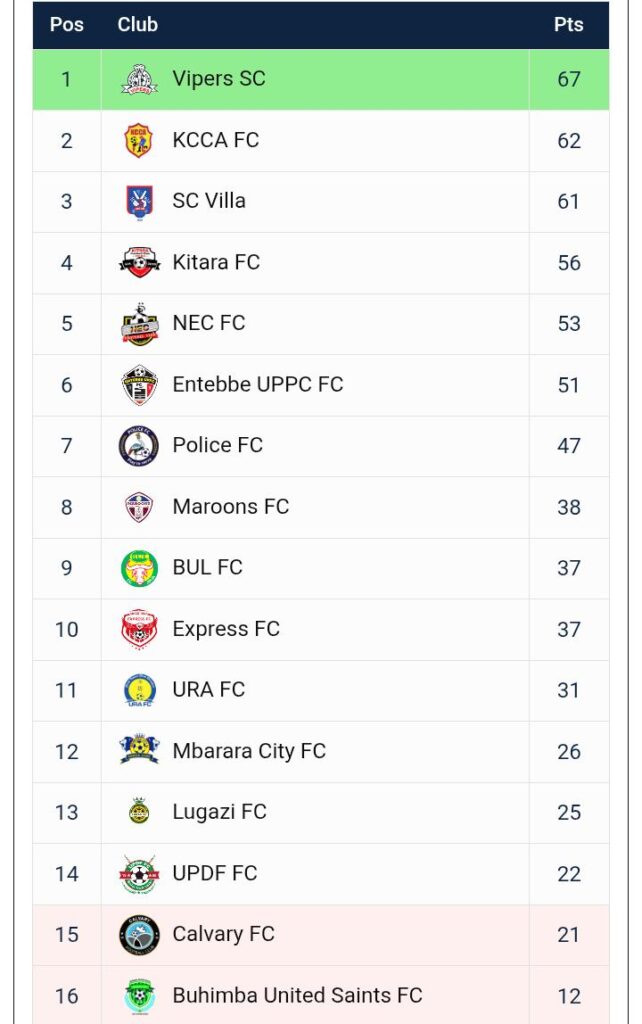
The conclusion of the 2025/26 StarTimes Uganda Premier League season offered more than just final league standings. It provided valuable insight into which clubs are positioned to make significant strides in the coming campaign.
For Express FC, a 10th-place finish does not tell the full story.
The Red Eagles were among only eight clubs to improve their points-per-game return after Matchday 15, increasing from 1.07 in the first half of the season to 1.40 in the second half.
They finished seventh in the second-half standings, suggesting a team that found momentum when it mattered most.
According to the Performance Intelligence Report, momentum ranking is often a stronger indicator of future success than final league position. Express did not simply survive last season—they showed signs of progress.
With six Uganda Premier League titles to their name, the challenge for the Red Eagles is whether they can transform that late-season resurgence into a sustained push for the top six in 2026/27.
2025/26 Season in Numbers
Express finished the campaign with 37 points from 30 matches, recording nine wins, ten draws, and eleven defeats.
They scored 28 goals and conceded 31, ending the season with a goal difference of minus three.
Muhamed Kagawa Ssenoga led the scoring charts with six goals, accounting for 21 percent of the club’s total goals while averaging an impressive 0.59 goals per 90 minutes. Kenneth Kimera contributed five goals.
Defensively, Express possessed one of the league’s most reliable performers in Douglas Rwotngeyo Hanncent. The defender started 29 matches and played 2,610 minutes, representing 97 percent of the available league minutes—the highest figure recorded in the division.
Goalkeeper Khassim Hafizi also provided consistency, making 22 starts and accumulating 1,979 minutes. Hanncent’s discipline was equally impressive, averaging only 0.10 disciplinary incidents per 90 minutes.
The foundation was solid. The major challenge remained a lack of attacking output.
Key Areas for Improvement
1. Goal Production and Creativity
Express finished 10th in goals scored, highlighting the need for greater creativity in the final third.
Both Ssenoga and Kimera featured in the report’s “High Output, Low-Scoring Teams” category, a group that identifies players producing strong numbers despite limited support around them.
The evidence suggests Express do not necessarily lack finishers—they lack creators.
Adding a creative midfielder capable of providing six to eight assists per season could significantly increase the club’s attacking output and potentially elevate Ssenoga into a double-digit goalscorer.
2. Greater Depth in Attack
Beyond Ssenoga and Kimera, no other player reached five league goals.
While Habert Asiimwe remains a useful option, Express require another proven goalscorer capable of sharing the burden and providing competition across the frontline.
Bridging the gap between their 28 goals and the league average of 31.5 could prove decisive in their pursuit of a top-six finish.
3. Midfield Control and Discipline
Amos Muwonge recorded the highest disciplinary risk within the squad at 0.45 incidents per 90 minutes.
Improved control in midfield and better game management could help Express convert draws into victories and improve their points tally in close contests.
Potential Recruitment Targets
The Performance Intelligence Report identifies several players whose individual output exceeded the overall level of their respective teams.
Clinton Davico Kamugisha (Mbarara City)
Kamugisha scored nine goals for a Mbarara City side that managed only 26 league goals all season.
His 0.77 goals-per-90-minute ratio was the highest among players representing teams that scored 28 goals or fewer.
Accounting for 35 percent of Mbarara City’s total goals, Kamugisha would immediately add firepower to the Express attack.
Lawrence Olaboro (Calvary FC)
Olaboro scored eight goals and contributed 57 percent of Calvary FC’s total league goals—the highest dependency ratio in the league.
His ability to create and finish chances despite limited support suggests he could thrive in a stronger side with better service.
Freedom Mungudit (Lugazi FC)
Mungudit scored five goals and accounted for 26 percent of Lugazi’s total goals.
While his output was modest, he fits the profile of a player whose potential is restricted by the quality of the team around him.
His pace and directness could make him an effective wide forward within Express’ system.
Dickson Niwamanya (Maroons FC)
Niwamanya’s work rate, pressing ability, and attacking contribution make him an attractive squad option.
He possesses the qualities needed to improve squad depth and provide valuable rotation across the attacking positions.
The 2026/27 Projection
If Express successfully recruit a creative midfielder alongside either Kamugisha or Olaboro, their attacking output could increase significantly.
A 25 percent improvement in goals scored—from 28 to approximately 35—while maintaining their defensive record of 31 goals conceded would project a total of around 47 points over the season.
That tally would have been enough for seventh place in the 2025/26 campaign and could place the club firmly in contention for a top-six finish.
The foundations are already in place.
Express possess one of the league’s most dependable defenders in Hanncent, a settled goalkeeper, and a technical team that oversaw one of the biggest improvements in performance after the midway point of the season.
The report identifies clubs with such profiles as potential dark horses for the following campaign. The second-half data points to a team that learned how to compete more effectively and produce better results.
With smart recruitment, improved creativity, and greater attacking depth, the Red Eagles have every reason to believe they can transform mid-table stability into a genuine top-six challenge.

About the author
More from this authorGeoffrey Mugabi
Geoffrey Mugabi is an award winning sports journalist with a focus on local sports and a passion for storytelling both on and off the pitch
Reader responses
Comments
Leave a comment
Join the conversation around the story.